Public Recipe
Musubi Amanah: Tamago & Yuzukoshō Lacquer (Systemic Composition)
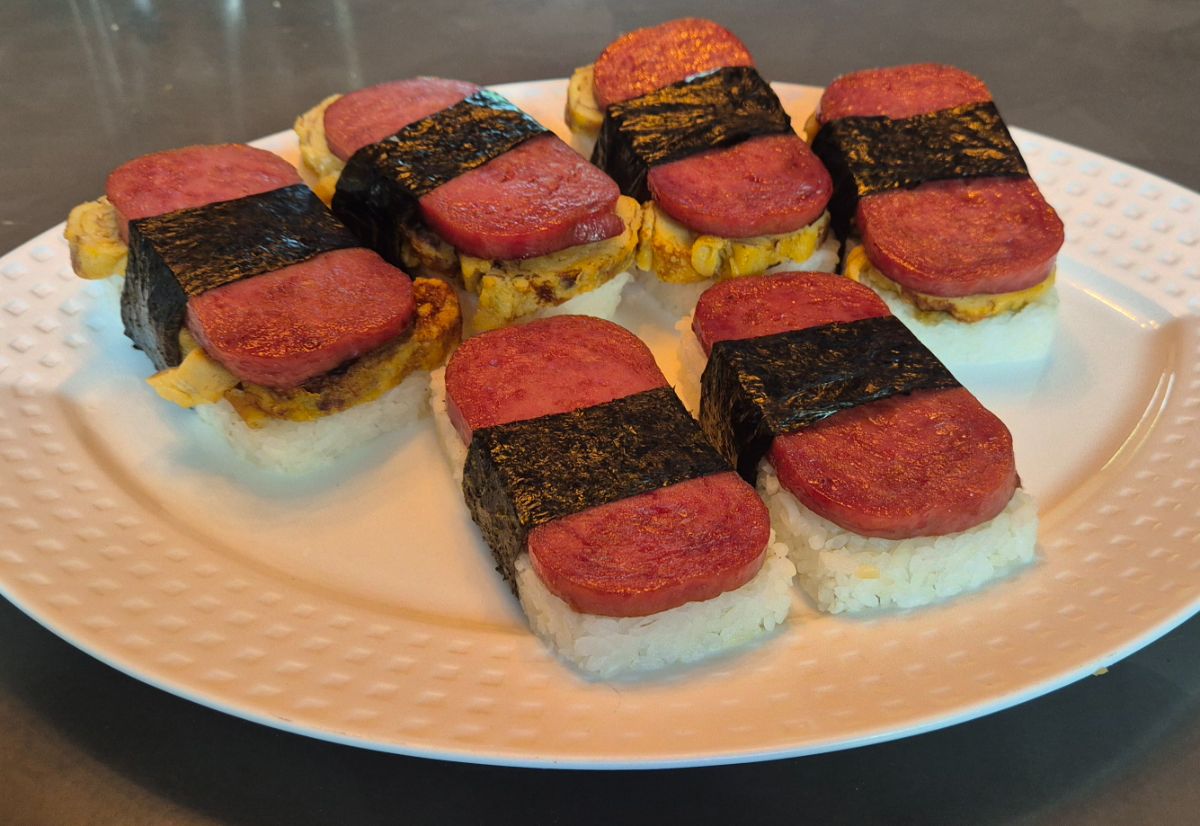
Hawaiian
5.0· 22
Serves 6
easy
Hawaiian
Ingredients
Servings
6
- 2 cup short grain rice — rinsed until water runs clear (rice-base)
- 2.2 cup water (rice-base)
- 2 tbsp rice vinegar (rice-seasoning)
- 1 tbsp sugar (for rice) (rice-seasoning)
- 0.5 tsp salt (rice-seasoning)
- 4 unit eggs (tamago-base)
- 1 tbsp soy sauce (for tamago) (tamago-base)
- 1 tbsp mirin (for tamago) (tamago-base)
- 1 tsp sugar (for tamago) (tamago-base)
- 1 tbsp dashi (tamago-base)
- 0.5 tsp yuzukosho (tamago-base)
- 1 can spam (spam-lacquer)
- 2 tbsp soy sauce (for lacquer) (spam-lacquer)
- 1 tbsp mirin (for lacquer) (spam-lacquer)
- 2 tsp sugar (for lacquer) (spam-lacquer)
- 3 sheets nori (assembly)
Mise en Place
0/5Process
1
prepare rice system
- 1.Cook the short grain rice with the specified water until tender.
- 2.While rice is steaming, combine the rice vinegar, sugar (for rice), and salt.
- 3.Gently fold the seasoning liquid into the warm rice using a cutting motion to avoid mashing grains.
- 4.Press seasoned rice into compact rectangular blocks using a musubi mold or wet hands.
2
execute tamago system
- 1.Heat a non-stick pan over medium-low heat with a light film of oil.
- 2.Pour a thin layer of the Tamago Base System into the pan.
- 3.Once set but still moist, roll the egg to one side.
- 4.Repeat with remaining base, building the roll until all mixture is used.
- 5.Slice the resulting omelet into slabs matching the dimensions of the spam.
3
execute spam lacquer system
- 1.Sear spam slabs in a dry pan over medium-high heat until golden and slightly rendered.
- 2.Lower heat to medium and pour in the Spam Lacquer System slurry.
- 3.Baste and flip the spam continuously as the liquid reduces.
- 4.Remove from heat once the liquid has transformed into a thick, glossy lacquer coating the meat entirely.
4
final assembly
- 1.Place a slab of the prepared Tamago onto a seasoned rice block.
- 2.Top with a slab of the Lacquered Spam.
- 3.Center a nori strip over the spam and wrap it tightly around the entire stack.
- 4.Seal the nori seam with a touch of water or the residual warmth of the rice.
Plating
- Serve the musubi immediately while the rice is warm and the lacquer is tacky.
- Stack neatly to showcase the distinct layers of white rice, yellow tamago, and dark lacquered spam.
Sensory Checks
Color
The Spam should have a glass-like, dark amber lacquer that is tacky but not runny.
Texture
The Tamago should be custardy and pale, providing a soft textural bridge between the rice and meat.
Seal / Structure
The Rice should be tight and seasoned, holding its shape without being gummy.
Common Errors
- ⚠ Systemic Bleed: Mixing the lacquer sugar with the rice seasoning. Ensure each component's sugars are kept separate.
- ⚠ Lacquer Scorching: Reducing the spam glaze too fast. It should bubble into a syrup, not burn into a crust.
- ⚠ Loose Assembly: Not compressing the rice block firmly enough before layering.
Notes
- This adaptation restructures the recipe into compositional systems (Rice, Tamago, Lacquer) to eliminate ingredient allocation ambiguity.
- Component-based modeling ensures that the specific ratios of soy and sugar for the lacquer do not interfere with the seasoning of the tamago.
Amanah Compilation
Engine: Amanah Recipe Adaptation Engine
Structural completeness: 99%
Techniques in this recipe
Lineage
Recipes derived from this one