Public Recipe
Kkaennip Kimchi (perilla En Salsa De Soya)
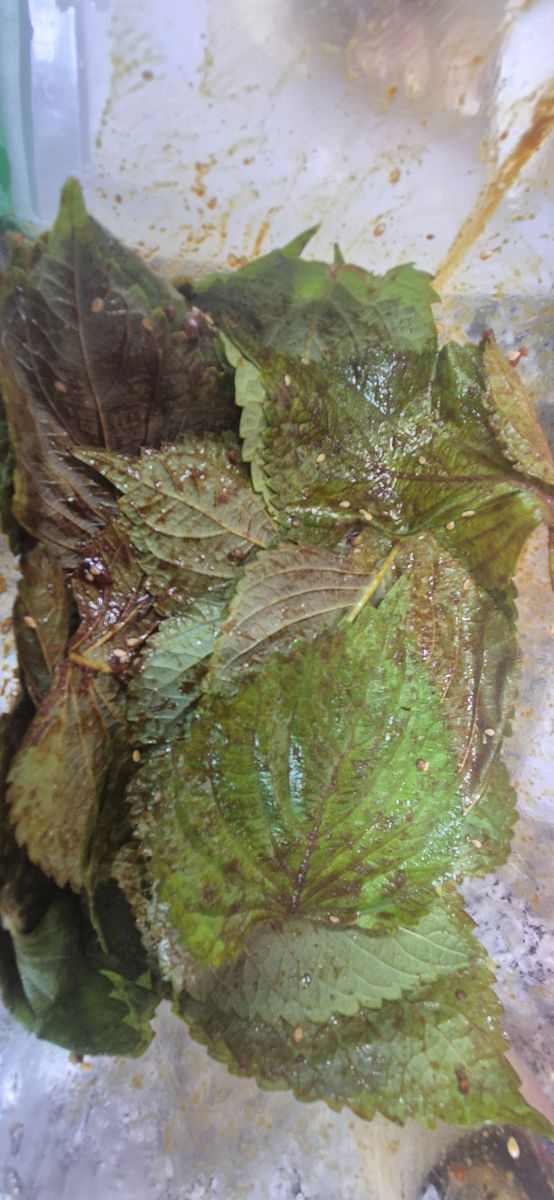
Korean
5.0· 1
Serves 6
Korean
Ingredients
Servings
6
- 50 pieza hojas de perilla — lavadas y completamente secas (base)
- 4 tbsp salsa de soya (salsa base)
- 1.5 tbsp salsa de pescado (umami)
- 1.5 tbsp gochugaru (picante)
- 1 tbsp azúcar (balance)
- 4 diente ajo — finamente picado (aromático)
- 0.5 pieza cebolla — picado muy fino (aromático)
- 2 pieza cebollín — rebanado fino (aromático)
- 1 tbsp aceite de ajonjolí (acabado)
- 1 tbsp ajonjolí tostado (acabado)
- 1 tsp anchoa fresca o pasta de anchoa (umami profundo)
Mise en Place
0/5Process
1
mix sauce
- 1.Combine salsa de soya, salsa de pescado, gochugaru, azúcar, ajo, cebolla, cebollín y anchoa en un tazón.
- 2.Taste and adjust the flavor balance: it should be predominantly salty with a slight sweetness and a progressive heat.
2
stacked leaf seasoning
- 1.Place 2-3 perilla leaves one on top of the other.
- 2.Apply a light tablespoon of the prepared sauce over the leaves.
- 3.Repeat the process, stacking leaves and applying sauce, forming a tower.
- 4.Ensure not to mix or stir the layers to maintain structural integrity.
3
finish and rest
- 1.Add sesame oil and toasted sesame seeds at the end to preserve their aroma.
- 2.Refrigerate the kkaennip kimchi for a minimum of 6 hours, ideally 24 hours, and up to 72 hours for optimal flavor development.
Plating
- Serve as banchan (Korean side dish) alongside main courses.
- Ideal for accompanying white rice, Korean grilled meats, or as a filling for wraps.
Sensory Checks
Check
The sauce should taste saltier than seems comfortable, as it will balance with the leaves.
Heat
The heat should be aromatic, not aggressive.
Aroma
The aroma should be intensely herbal with notes of toasted sesame and garlic.
Color
The flavor should be high in umami, balanced salty, and slightly sweet.
Texture
The texture should be soft yet structured, not mushy.
Color
Visually, the layers should be defined with a slight sheen from the oil.
Common Errors
- ⚠ Flat flavor: lack of umami. Solution: add more fish sauce or anchovy paste.
- ⚠ Watery texture: damp leaves. Solution: dry the leaves completely before use.
- ⚠ Too salty: excess soy sauce. Solution: increase the amount of perilla leaves or let it rest longer for flavors to integrate.
Notes
- This is not a long-fermented kimchi; balance, freshness, and the layering technique are paramount.
- Perfectly drying the leaves is key to preventing sauce dilution.
- Finely chopping aromatics ensures even distribution in each layer.
- Extended resting allows flavors to develop and integrate deeply.
Amanah Compilation
Engine: Amanah Engine v1.0
Structural completeness: 95%
Flagged:
- The original recipe used 'pieza' for perilla leaves, which is a count. Converted to 'pieza' as a unit for consistency with UMF.