Public Recipe
Filet Mignon From Whole Tenderloin (butchery, Resting And Reverse Sear)
French-American
5.0· 21
Serves 8
medium
American-French Fusion
Ingredients
Servings
8
- 1 whole beef tenderloin (main protein)
- kosher salt — to taste (seasoning)
- neutral oil — as needed (searing fat)
Mise en Place
0/4Process
1
butchery and prep
- 1.Remove excess fat and all silver skin from the whole tenderloin using a boning knife.
- 2.Preserve the central cylindrical section as intact as possible.
- 3.Tie the tenderloin with butcher’s twine at 3–4 cm intervals along the length of the roast to encourage a uniform cylindrical shape.
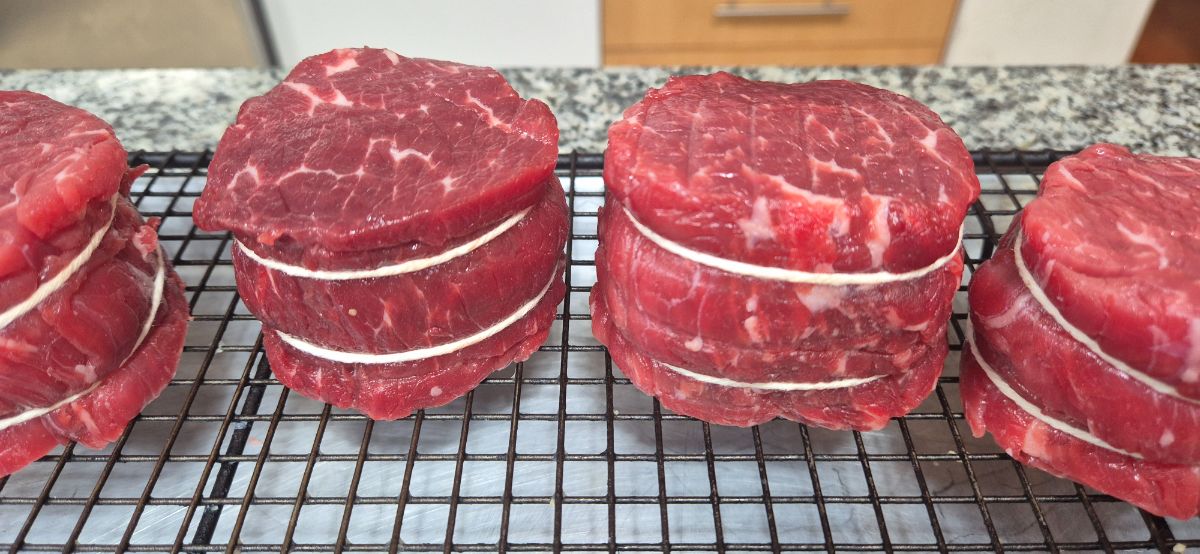
- 4.Place the tied tenderloin on a wire rack set over a tray and refrigerate uncovered overnight to allow the shape to set and the surface to dry slightly.
- 5.Remove the twine and cut the center of the tenderloin into thick medallions approximately 4–5 cm tall.
- 6.Tie each medallion individually with butcher’s twine to reinforce the cylindrical shape and ensure even cooking.
2
reverse sear process
- 1.Place medallions on a rack in a low oven (110–120°C) until the internal temperature reaches approximately 48–50°C.
- 2.Heat a cast iron skillet with neutral oil until very hot.
- 3.Sear the medallions on all sides until a deep brown crust forms.
- 4.Rest the steaks briefly for 5 minutes before removing the twine and serving.
Plating
- Remove the butcher's twine carefully before serving.
- Serve as individual medallions on warmed plates.
Sensory Checks
Check
Surface of meat should be dry to the touch before searing to ensure a good crust.
Heat
Internal temperature should reach 50–52°C for a perfect medium rare.
Color
Look for a deep brown, even crust during the final sear.
Common Errors
- ⚠ Failing to remove all silver skin, which results in tough, chewy bits.
- ⚠ Skipping the overnight air-dry, which prevents a superior crust from forming.
- ⚠ Overcooking in the oven before the sear; remember the temperature will rise during the pan-searing phase.
Notes
- The overnight rest is crucial for both the shape of the filet and the efficiency of the Maillard reaction during searing.
- Using a wire rack is essential for airflow around the entire piece of meat.
Amanah Compilation
Engine: Amanah Engine v1.0
Structural completeness: 100%