Chicken Francese
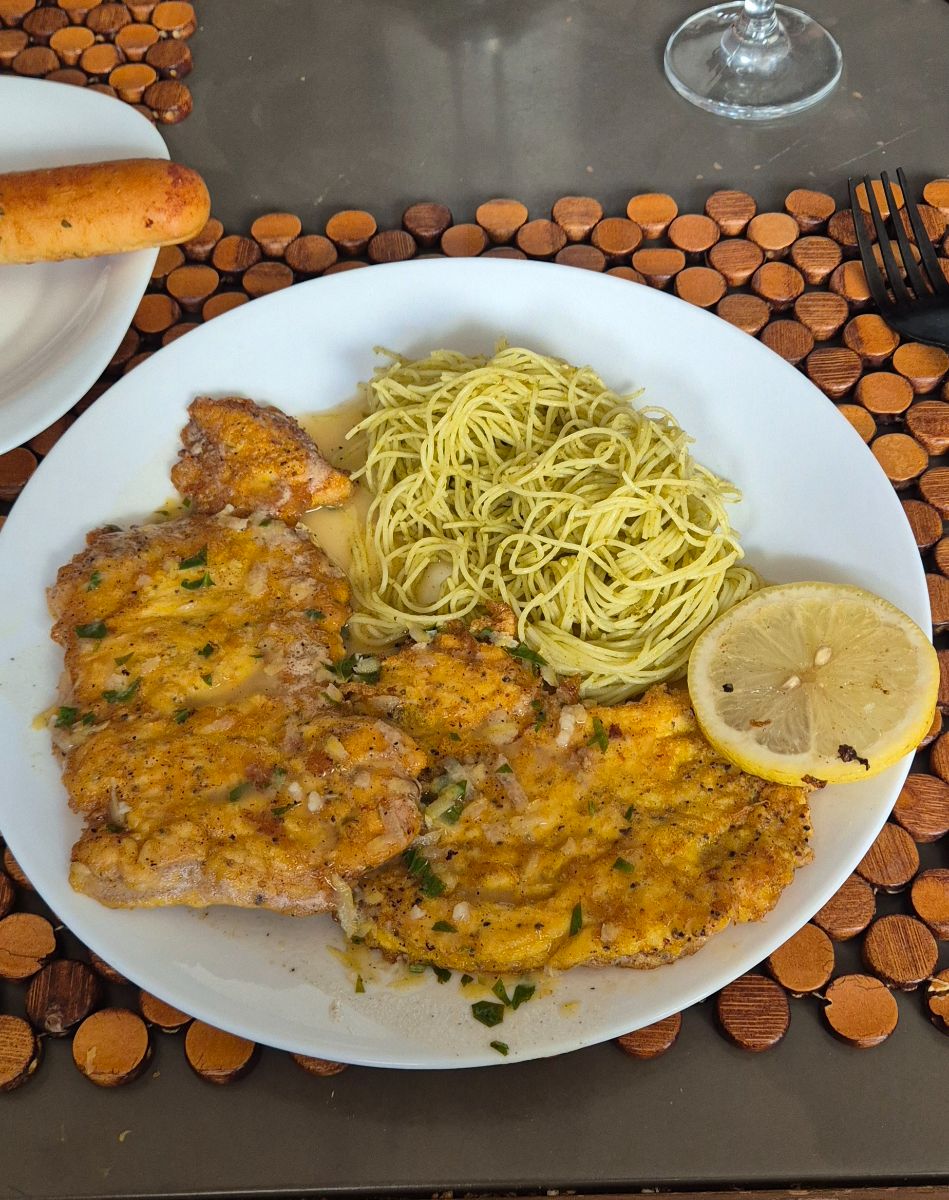
Italian-American
Ingredients
- 900 g boneless, skinless chicken breasts — sliced horizontally into cutlets, pounded to 6mm thickness (primary protein)
- 1.5 tsp kosher salt — divided (seasoning)
- 1 tsp freshly ground black pepper — approximately (seasoning)
- 93 g all-purpose flour — for dredging and sauce stabilization (dredge and thickener)
- 3 whole large eggs — well beaten (outer coating)
- 15 g parmigiano-reggiano — finely grated (savory seasoning)
- 15 ml water (loosens egg mixture)
- 45 ml extra-virgin olive oil (frying medium)
- 112 g unsalted butter — divided, softened and cold cubed (browning and flavor)
- 180 ml dry white wine — crisp, not heavily oaked (acidity and aromatic base)
- 300 ml chicken stock — unsalted or low-sodium preferred (sauce body)
- 1 whole lemon zest — finely grated (lemon aroma)
- 45 ml fresh lemon juice — divided into 30 ml and 15 ml portions (acidity and freshness)
- 1 small clove garlic — lightly crushed (background aromatic)
- 8 g flat-leaf parsley — finely chopped (freshness and garnish)
- 0.5 whole lemon — cut into very thin rounds (garnish)
Mise en Place
0/14Process
flour first dredging
- 1.Dredge one cutlet lightly in flour.
- 2.Shake and brush away all visible excess flour to ensure a thin coating.
- 3.Dip the floured cutlet into the egg mixture, ensuring full coverage.
- 4.Allow excess egg to drip away for several seconds to prevent a heavy coating.
- 5.Transfer to the clean tray and repeat with the remaining cutlets.
shallow frying
- 1.Heat approximately half of the olive oil and half of the frying butter in the skillet over medium-high heat.
- 2.When the butter foams but before it browns, add enough cutlets to form a single uncrowded layer.
- 3.Fry the first side until deep golden brown and crisp, approximately 2 minutes.
- 4.Turn and fry the second side until golden brown, approximately 1 1/2 to 2 minutes.
- 5.Transfer the cooked cutlets to the preheated wire rack to maintain crispness.
- 6.Repeat the frying process in batches, adding the remaining oil and butter as needed to maintain sufficient heat and fat.
fat management and optional lemon sauté
- 1.Pour off excess frying fat from the skillet, reserving approximately 15 ml of fat and the browned fond.
- 2.If using the lemon rounds for garnish, add them to the skillet and cook for approximately 30 seconds per side until lightly caramelized. Remove and reserve.
- 3.Add the crushed garlic to the hot fat and cook until fragrant, about 20 seconds, ensuring it does not burn.
pan deglazing and reduction
- 1.Pour the white wine into the hot skillet.
- 2.Scrape the bottom of the skillet thoroughly with a wooden spoon to dissolve all browned fond, which adds depth of flavor.
- 3.Simmer the wine until it reduces significantly, concentrating its flavor to approximately 80 ml.
- 4.Add the chicken stock, lemon zest, and the first 30 ml portion of lemon juice to the skillet.
- 5.Bring the sauce to a vigorous simmer and reduce by approximately one-third, allowing flavors to meld, about 5 to 7 minutes.
- 6.Remove and discard the garlic clove.
beurre manie thickening
- 1.Whisk small portions of the beurre manié (flour and softened butter paste) into the simmering sauce.
- 2.Continue to simmer for 60 to 90 seconds after each addition, allowing the sauce to thicken slightly and cook out the raw flour taste.
butter emulsification
- 1.Reduce the heat to its lowest setting or remove the skillet briefly from the burner to prevent the sauce from breaking.
- 2.Gradually whisk in the cold butter cubes, a few at a time, allowing each addition to emulsify into the sauce before adding the next.
- 3.Continue whisking until all the cold butter is incorporated, creating a glossy, smooth, and emulsified sauce.
- 4.Whisk in the final 15 ml portion of fresh lemon juice for brightness.
- 5.Stir in the chopped parsley and freshly ground black pepper.
- 6.Taste the sauce and adjust seasoning with salt only if necessary.
brief glazing
- 1.Return the fried chicken cutlets to the skillet containing the warm sauce.
- 2.Gently turn each cutlet once to coat it lightly with the sauce.
- 3.Heat for only 20 to 30 seconds, just enough to warm the chicken through without compromising the coating's texture.
- 4.Remove the chicken from the skillet immediately to prevent sogginess.
Plating
- Arrange the chicken cutlets on a warm platter or individual plates, slightly overlapping them.
- Spoon the glossy sauce over and around the chicken, ensuring the coating remains visible and crisp.
- Garnish with the reserved sautéed lemon rounds and a sprinkle of fresh parsley.
- Serve immediately to preserve the texture of the coating and the emulsified state of the sauce.
Sensory Checks
Texture
Fried chicken: Observe a deep golden-brown color with a delicate, irregular egg coating. The chicken should be tender with lightly crisp edges. Avoid pale coatings, thick flour patches, or an egg layer that detaches.
Color
Reduced sauce before butter: The sauce should be lightly thickened but still fluid, with concentrated savory and slightly acidic notes. Avoid a strong raw wine flavor, watery consistency, or excessive saltiness.
Texture
Finished sauce: The sauce must be glossy, emulsified, and silky smooth. It should taste buttery, savory, and distinctly lemony, without the harshness of pure lemon juice. Watch for visible pools of melted butter, a gravy-like thickness, or unbalanced acidity.
Common Errors
- ⚠ Coating detachment: Occurs from excess flour not being removed, insufficient skillet heat, moving the chicken before the coating sets, or prolonged simmering in the sauce. Prevent by shaking off excess flour, allowing excess egg to drip, and not disturbing the chicken during initial frying.
- ⚠ Pale and greasy chicken: Caused by low oil temperature, overcrowding the skillet, or too much egg mixture remaining on the cutlets. Prevent by cooking in batches over medium to medium-high heat and allowing excess egg to drain.
- ⚠ Sauce tastes sharply sour: Results from adding too much lemon early, insufficient reduction of stock and wine, or a lack of butter or salt. Prevent by using lemon in stages and completing reductions before finishing the sauce.
- ⚠ Sauce breaks (separates): Occurs if the sauce boils after cold butter is added, if butter is added too quickly, or if the butter is not cold. Prevent by mounting the sauce over very low heat or off-heat, whisking cold butter in gradually.
- ⚠ Sauce becomes floury or gravy-like: Caused by adding too much beurre manié or not cooking the flour sufficiently after incorporation. Prevent by adding beurre manié incrementally and stopping when the sauce lightly coats a spoon.
Notes
- The Parmigiano-Reggiano in the egg wash should be subtle, enhancing savoriness without making the dish taste like chicken Parmesan.
- Lemon juice is added in two stages: the first portion integrates and mellows during reduction, while the second restores fresh citrus brightness.
- A wire rack is used instead of paper towels to prevent the underside of the coating from becoming soggy.
- The chicken cutlets can be fried a few minutes in advance, but the sauce must be completed and served immediately.
- While not traditional, pesto angel hair pasta, with its basil, garlic, and Parmesan notes, pairs well if dressed lightly, allowing the Francese sauce to remain dominant.
Amanah Compilation
Engine: Amanah Engine v1.0
Structural completeness: 95%
Flagged:
- Exact amount of salt and pepper for final seasoning was not specified, marked as 'as needed'.